
Exhibitions
Temporary exhibitions are normally located at the ground floor of Casa del Administrador. Sometimes they move to the garden or the Casa Palacio.
La Concepcion houses a permanent exhibition at the Casita del Jardinero. Some scenes of the origin of the garden are told with Barbie dolls dioramas.
January: Fernando Luque Cuesta. Naturaleza en grabados.
Gabriel A. Gutiérrez Tejada. Las edades del pinsapo, estudio descriptivo del abeto andaluz.
February: Javier Rupérez. Mirkos. Photograph on Dibond.
March: Javier Rupérez. Mirkos. Photograph on Dibond.
April: Jeanne Leroy. Micro - Macro
May:Licet González. La sombra de lo fértil.
Jun: Francisco Civantos. Enmascarados.
July: Participantes del Concurso de fotos. Ascociación de Amigos.
August: Participantes del Concurso de pintura. Ascociación de Amigos
September: Kristel Peijnenborg La Pequeña Mirada
October: BIOPHILIA. Pasión por la vida.
November:Academia de ciencias de Málaga. Botánicos.
December: Julia Gallego Valdés. Paisajes evaporados.
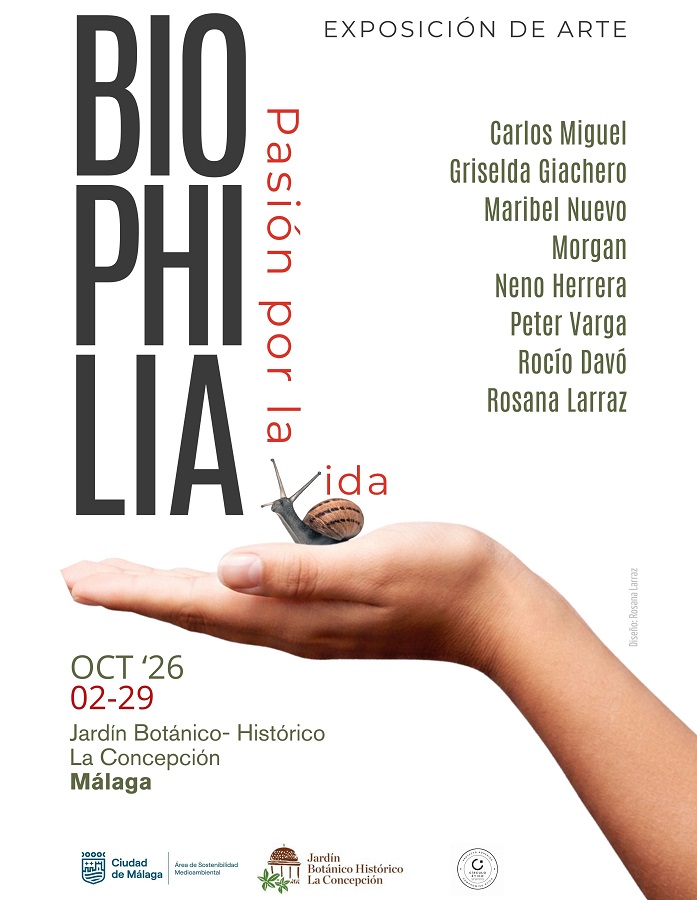
Biophilia. Pasión por la vida.
2 - 29 October 2026
‘Passion for Life’ brings together eight artists at the La Concepción Historic Botanical Garden. ‘Biophilia’ will be on display in the garden from 2 to 29 October.
‘Passion for Life’ is an art project that invites us to reflect on our relationship with life through painting, photography, printmaking and sculpture. The exhibition, curated by Rosana Larraz, is based on the concept of biophilia developed by Erich Fromm, understood as a love of life and a desire to foster its growth.
Carlos Miguel, Griselda Giachero, Maribel Nuevo, Morgan, Neno Herrera, Peter Varga, Rocío Davó and Rosana Larraz are taking part with works that, through different artistic languages, explore themes such as nature, landscape, memory and perception. The Jardín La Concepción provides the ideal setting for this exhibition. BIOPHILIA invites visitors to pause for a moment and create a space for quiet reflection on our relationship with life, in dialogue with the richness and diversity of the garden itself. The project also embodies a commitment to collaboration, equal treatment and transparency within the artistic sphere.
The history of La Concepción told by Barbie
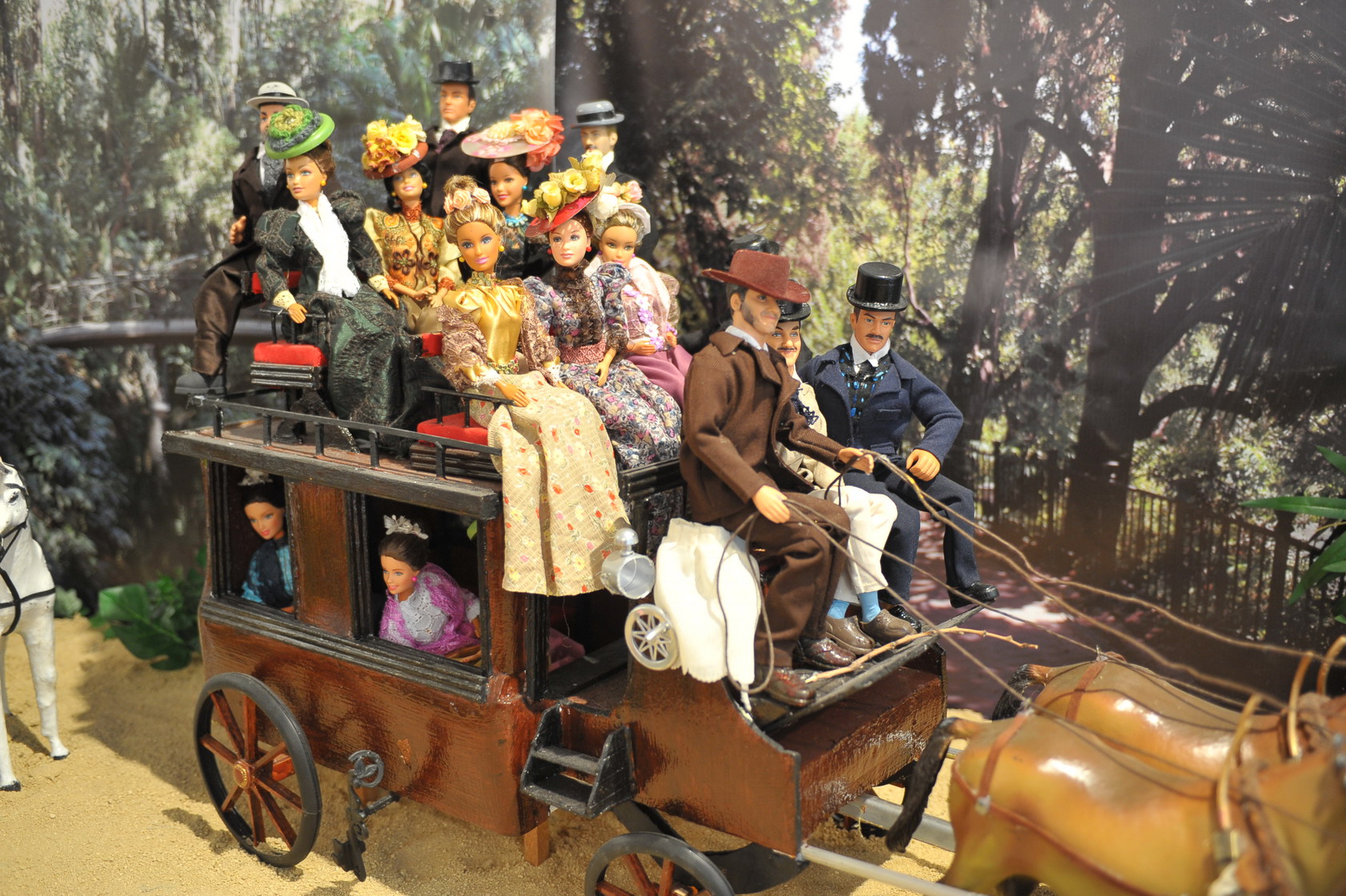
The idea of using dolls to recreate the garden's history was conceived by the artist Alberto Martin, who has been putting together displays with Barbie dolls for many years. After studying a number of late 19th-century photographs, mostly from the Silvela Legacy, he created a series of almost identical scenes using not only the world-famous Barbie but also Ken, Madelman and other similar figures. Sponsored by the Malaga Foundation and the Friends of La Concepcion Association.
The aim of this exhibition is to portray both a key period in the history of La Concepcion and the Bourgeois lifestyle of the time in a way that will appeal to visitors of all ages. All of the materials used in the displays have been recycled: bottle tops, sink racks, clothes pegs, pencil sharpeners, pin cushions etc. Each figure is dressed in a different costume and hat made from dressmakers' cuttings; the hairstyles, fans and parasols sported by the women are all unique and were inspired by 19th-century clothing catalogues.
Furniture of the old library of the Stately Home
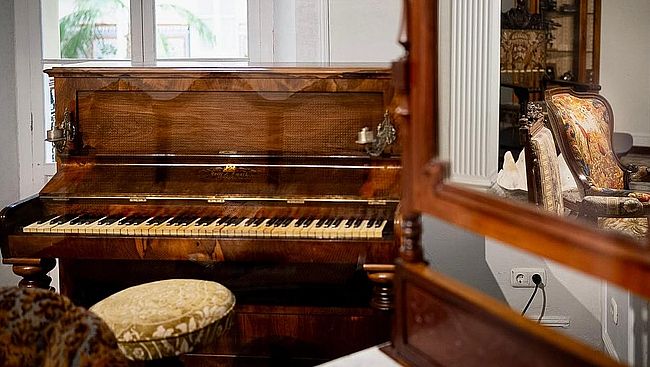
This exhibition displays period furniture in the room that housed the library of the Casa Palacio in the 19th century. The room can be accessed through a methacrylate tunnel to prevent deterioration of the furniture. This is intended to enhance the value of the elements of this space, which has allowed not only to improve its preservation, but also to generate greater artistic and cultural interest among visitors. Most of this furniture is part of the municipal heritage and dates from the second half of the nineteenth century and the first half of the twentieth century. Some of the most noteworthy are the office table of General Espartero, made of oak and of French origin, which served as Jorge Loring's own desk; as well as a mahogany chair that accompanies it. Another valuable element is an English Edward VI style mahogany corner cabinet with built-in bookshelves, display cabinet, table and sofa.