
Agapanthus africanus
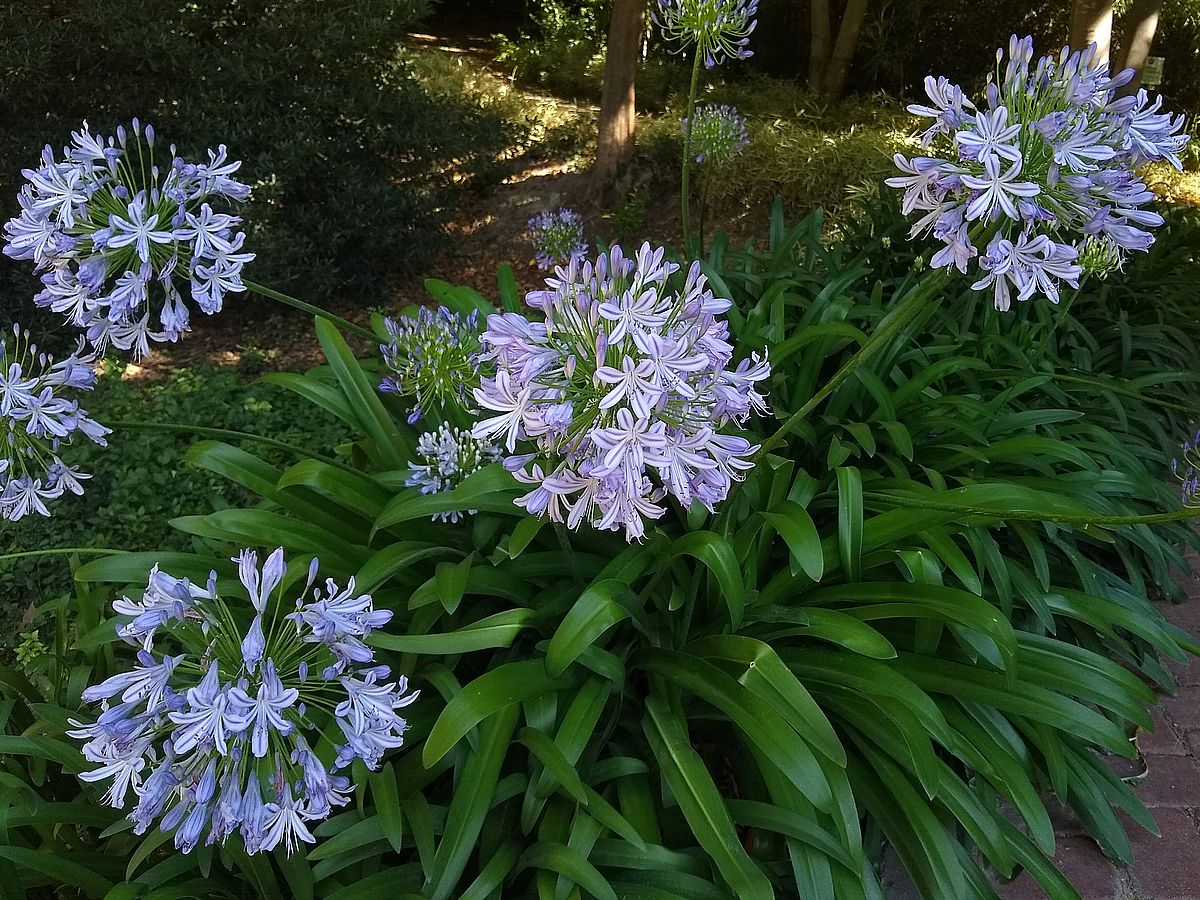
Scientific name: Agapanthus africanus (L.) Hoffmanns.
Family: Amaryllidaceae
Common name: Lily of the Nile, African Lily
Agapanthus is a perennial herbaceous plant native to South Africa, specifically the Cape of Good Hope. There it grows from sea level up to an altitude of 1,000 m, often on rocky terrain in the mountains. It seems that in that area it is adapted to survive fires and sprouts again after enduring the flames.
The leaves of the African Lily are ribbon-like and bright green. At the end of spring, long stems crowned with umbel inflorescences emerge from the leaves. The flowers are purple, although there are also white ones.
When this plant was first collected in South Africa in 1679, it was named Hyacinthus africanus. As soon as it was discovered, some rhizomes were sent to Europe to be grown in greenhouses, where it flourished at the end of the 17th century. The name Agapanthos comes from the Greek words ágape and anthos, which mean love and flower respectively, i.e., flower of love.
In gardening, it is considered a very hardy plant and is widely used to form attractive flower beds or to grow in pots. It can be planted in both full sun and partial shade and is very common in warm climates. In addition to its ornamental use, its roots and rhizomes are used in decoctions as an anti-inflammatory in its place of origin. At La Concepción, there is a beautiful flowerbed in the area of the round ponds, as well as several groups in Around the World in 80 Trees.